
| Author | 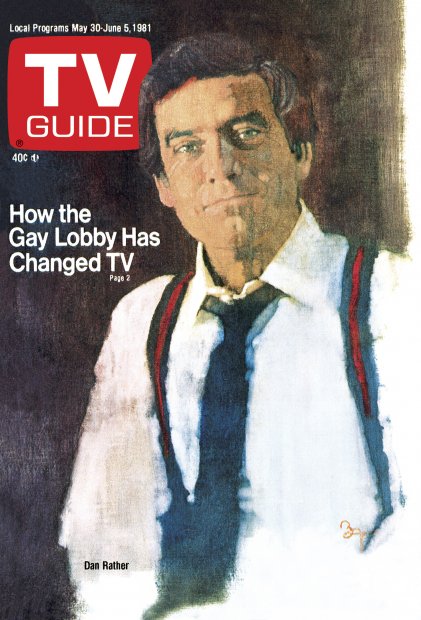 |
|---|---|
| Sally Bedell | |
| Issue | |
| Issue #1470 (May 30 '81 - Jun 05 '81) |
Dan Rather faced his baptism of fire, and the ice did not melt. For six hours straight, CBS’s new evening-news anchorman maintained a calm, steady presence during the drama surrounding the attempted assassination of President Ronald Reagan. Like his counterparts on NBC and ABC, he transmitted conflicting and sometimes incorrect information to an anxious audience at home. But throughout it all he was a consummate professional--even if the strain, and an incipient virus, wore his voice into a whisper. Says one CBS Evening News staffer, “During that long day it was Dan, all alone. He had to prove himself and he did.”
Since his debut on March 9, Dan Rather has been working tirelessly to show he is a worthy heir to that venerable anchor-Father of us all, Walter Cronkite, who stepped aside after 19 years. Contrary to the expectations of network news executives, CBS has not lost its grip on first place with the changing of the guard. Ratings for the first six weeks of Rather's tenure show the CBS Evening News with 27 per cent of the audience versus 23 per cent for NBC and ABC. During the same period last year, Cronkite attracted 27 per cent of the viewers, with.second-place NBC at 25 per cent and ABC trailing at 23 per cent. Insiders report that Rather's aggressive leadership as the broadcast's managing editor has boosted morale throughout the CBS News ranks. Even more telling, the frequent criticisms voiced by the network’s skeptics prior to Rathers ascent have virtually disappeared.
Nevertheless, his anchoring style has not yet hit a consistent stride. As he experiments with his new role and tries to grow before their eyes, viewers are getting a new glimpse of the Dan Rather they have watched for nearly 20 years, first as a correspondent for the evening news, then as a virtuoso globetrotter for 60 Minutes. In fact, Dan Rather's image as the confident, aggressive $8-million man has never really squared with the fellow known to his network colleagues, friends and, alas, enemies.
“I know two Dan Rathers,” says NBC producer Bob Mead, who traveled with Rather for five and a half years of White House duty at CBS. “I have often thought that if the real Dan Rather could invade the TV Dan Rather, he could run away wih it. He has a lot of charm.”
Part of that charm is his elaborate courtesy. Rather thinks nothing of fetching coffee for underlings, and his stream of compliments and thank-yous have become so legendary around CBS that they are called “Rathergrams.”
Because Rather is so free with his praise, some recipients doubt his sincerity. “He will come out with things like, 'You really look beautiful today,' when you feel like a piece of charcoal,” says one longtime Rather observer. “But I don’t think he is really disingenuous. I think he is insecure. He wants everyone to like him, and he pursues people with his kindness.”
Rather’s producers, those crucial men and women who do his groundwork, thrive amid the blandishments and feel intensely loyal to him. Says one, “So what if he writes a letter saying you are terrific and he writes the same letter to 10 others? How many letters do producers get, anyway? Not many.” Nor does Rather consider this tendency a fatal character flaw. ‘I believe in saying ‘please’ and ‘thank you.’ I may overpraise sometimes,’ he says. “But I know I respond much better to praise than damnation. Most other peopie do, too.”
When Dan Rather speaks, he is thoroughly convincing. Sitting at lunch by an immense window overlooking Mannattan’s Central Park, he speaks earnestly and softly, and he listens intently, his dark eyes never evading his questioner. His ruggedly handsome face is more deeply lined than it appears through the camera’s eye, his hair more heavily shot with gray than television lights reveal. “Dan Rather is enormously blessed and he knows it,” say Rather. “Most of the time I walk around feeling very humble about it.”
Rather's detractors find it hard to believe that such soulful remarks are genuine. And they see his flattery as just another technique of a first-class operator. “It’s more than Southern courtliness. He doesn’t miss a trick,” says one skeptic. Others belittle him for not having written his two books, “The Palace Guard” and “The Camera Never Blinks” entirely on his own. They point to his habit of writing down Texas colloquialisms and lobbing them as ad libs (“Walter, this man is as mad as a porcupine with ingrown hairs”). His image, they say, is too contrived.
Rather freely admits to having modeled himself after CBS correspondent Edward R. Murrow. He even studied radio broadcasts and films of his idol to hone his delivery. But he dismisses the charge that he is too rehearsed. “I believe in homework,” he says, “I respect the audience enough to prepare.”
Indeed, before he anchored CBS's coverage of the space shuttle, he spent six hours a night for two weeks reading three briefing books, two accounts on space in encyclopedias, and Tom Wolfe's “The Right Stuff.” He also studied tapes of Cronkite during the previous three space shots.
Responding to criticism of own books, Rather says, “I think they represent the best of Dan Rather. There is a jealousy factor.”
There is indeed. Says one CBS insider, “Nobody else inspires such professional jealousy. Maybe it's because he’s so good-looking.” Says another old CBS hand and unabashed admirer of Rather, “It’s because Dan is a showboat, because he wants to do everything. His appetite is too big, his ambition is too apparent.”
Some critics contend that Rather maneuvered too nakedly for the top job at CBS News. When CBS News president Bill Leonard asked Rather in November 1979 to renegotiate his contract, Rather's agent, Richard Leibner, immediately signaled ABC and NBC that his man might be available to anchor their evening newscasts. Rather discounted NBC's offer early on, but he was genuinely torn between ABC and CBS. After two weeks of public agonizing, Rather signed with CBS for $8 million over five years and ended up beaming smugly from the cover of Time magazine. (Some insiders even claim that the prospect of that cover story hastened the negotiations.) Says one CBS source, “Cronkite rose up through CBS for many years and so did Dan. But the way in which Dan’s negotiations became so publicly competitive aroused suspicious feelings among some people. If he was so loyal to CBS, why was he so active with the others? Somehow you can't picture Cronkite getting into a bidding war like that.”
Correspondent Mike Wallace, a friend as well as colleague of Rather's, takes a more philosophical view: “He probably has manipulated his career. What's wrong with that? When you think of Vietnam, London and successive White Houses, he has paid his dues.” Says another close Rather watcher, “Dan has left a lot of people behind with seeming sleight of hand. I think Dan Rather is much smarter than most people think he is.”
Rather has never tried to bury his modaest Texas origins. His father was a ditch digger and his mother a waitress. Dan made it into Sam Houston State Teachers College only after his mother cashed in two $25 savings bonds.
Rather dismisses the contention that his education left him with an intellectual inferiority complex. But when he is asked about a colleague’s observation that “Dan Rather has been embarked on a program of self-improvement for the last 20 years. lt has made him good but it has not made him tranquil,” Rather concedes, “Very perceptive. I expect that's true.” Rather objects, however, to the belief that “If you want to read Montaigne and Homer, well, you must be insecure about your education because nobody reads that at 35 or 40.”
Rather's diminutive wife Jean, to whom he has been married for 24 years, shares his enthusiasm for reading. She belongs to a book club and often makes recommendations to Dan. Son Danjack, 20, and daughter Robin, 22, have pursued their learning more formally, at Columbia and Tufts Universities.
Rather began his professional career reporting for the Associated Press and United Press International wire services and the Houston Chronicle. In 1956 he moved into radio and television to stay.
Rather's big break came in 1961, when he was a reporter for KHOU-TV, the CBS affiliate in Houston. For three days he bravely withstood the onslaught of Hurricane Carla to file reports to CBS News in New York. The network hired him as a correspondent shortly thereafter and his reputation as a tough, indefatigable reporter began to build as he moved through assignments ranging from the civil-rights struggle in the South and John F. Kennedy's assassination to Vietnam and the White House years of Lyndon Johnson and Richard Nixon.
That image crystallized during the Watergate years, when he was, by his own admission at the time, “the most hated White House correspondent.” He became downright controversial after a March 19, 1974, news conference when then President Nixon answered a question from Rather by asking “Are you running for something?” and Rather shot back, ‘No, sir, Mr. President. Are you?”
But Rather was not as abrasive off Camera as he was in his hard-hitting nightly reports. “There is a lot of mythology about Dan Rather,” says Ronald Ziegler, who served as President Nixon’s press secretary. Rather's relationship with Ziegler, although often tense in the White House briefing room, was cordial after hours. They had social dinners from time to time and played on the White House baseball team together, Ziegler at shortstop and Rather at second base.
Even in Ziegler’s briefings, Rather was not especially aggressive. He preferred to stand in the back of the room, never taking a note as he absorbed the information and watched Ziegler intently. Rather was masterful at finding bits of information from a variety of sources and piecing them together. Recalls Ann Grier, Ziegler's secretary at the time, “Dan would ask a Casual question pertaining to my work. I would answer and walk away. Ten minutes later I would be wondering why and I would begin to worry.”
Envious rivals derided Rather's techniques and his penchant for favoring interpretation over hard facts. Sniffed one, “Dan could take a grain of truth and build it into a sand castle.” But even Ziegler admits, “Dan is a very sensitive individual. His perception is excellent.”
In his 60 Minutes role Rather had to develop a new modus operandi. Working on five stories at a time, he could not report and pursue sources as he had done at the White House. Instead, he checked in on stories as his five producers researched and developed them. Rather has always been a team player, open to ideas from cameramen as well as news executives. “Dan likes to hear what he’s doing wrong. I find that really rare,” says Artie Bloom, the director for 60 Minutes. Since writing is not one of Rather's strengths, he often left the scripts to his producers.
Rather’s skills shine best during his interviews. One of Rather's 60 Minutes producers, Joel Bernstein, recalls the time Rather faced an interview with a man and the wife he had battered. “I told Dan I could not think of anything to ask,” says Bernstein. “He came in and put them at ease. He got them talking ina conversation about something they were reluctant to discuss.’ Rather was indefatigable in his pursuit of 60 Minutes stories, frequently logging 100 hours a week on the job. For a pair of interviews with Patriotic Front leaders Joshua Nkomo and Robert Mugabe in 1979, Rather dropped a story he was doing in California and flew to Africa. After only three hours of sleep he and his crew drove at top speed to catch Mugabe at an airport. Unshaven and rumpled, Rather did the interview in 16 minutes on the airport runway. A day later, after tracking down Nkomo, Rather was on the return flight, recording radio news pieces in the airplane lavatory.
Colleagues also marvel at how cool Rather can be under pressure. Says one Evening News staffer, “There is no white heat. I have seen him when he was very upset with something and he was very professional. I have never seen him yelling and screaming.”
But away from his job Rather can be surprisingly touchy. “He has a funny short fuse about little personal slights,” says one CBS insider. Producer Bob Mead recalls the time a man in a bar in Fargo, N.D., tried to question Rather’s reporting techniques. Rather was “about an inch away” from a fistfight before Mead intervened.
Relaxing with his friends, Rather ranges furthest from his tensile presence on camera. He enjoys country music; during the White House years he said the words gave him a feel for the mood of the country. He sips Wild Turkey and tells stories about his youth, such as the time he learned from his father, “Rags” Rather, how to stay awake in church by holding his left foot in the air (a technique he later used to keep himself from falling asleep while driving).
He has also been known to let his hair down on the road. During a Presidential trip to Belgrade, Yugoslavia, in 1970 he stayed out most of the night, returning just an hour before a 5 A.M. departure. He oversiept and found himself left behind with neither passport nor visa. At the airport, he talked his way onto a Yugoslav jet headed for Rome, only to be taken into custody in Dubrovnik. After hours of interrogation, the Yugoslav police let him go. Finally he hid on a food truck and smuggled himself aboard a British charter flight, rejoining his astonished colleagues in London.
Such episodes of derring-do have made Rather legendary. In the year between his anointment as Cronkite’s successor and his actual ascent, he saw how they could backfire. In April 1980 he sneaked into war-torn Afghanistan in a peasant’s disguise for a story about the conflict, but critics within and outside CBS mocked the theatricality of his report. Several months later he admitted to a magazine writer that he had once shot heroin as a cub reporter, and his coworkers clucked in disbelief. Then, in November, Rather made headlines again after a wild ride with a Chicago taxi driver. Says 60 Minutes executive producer Don Hewitt, “Dan is understandably worried about his image. He wants to be perceived as an elder statesman, not a gungho, hell-for-leather reporter.”
Now that Rather is in charge of the CBS Evening News, he is still determined to display his reporter's stripes prominently. “I am, for better or for worse, a world roamer,” says Rather. “I want to give the broadcast some sense of that. One way to do it is to move the broadcast to distant places. Another is to get out on stories myself." Dan Rather's lofty goal is to become a “world-class correspondent who can make it anywhere.” Rather has little use for the Washington party circuit traveled by his rival Roger Mudd, who left CBS for NBC. Rather says, “There is such a thing as a social journalist. He says, ‘I am so well connected into the power structure that I don't need to dirty my hands going to the war. I'll just talk to the people who are running it’.” Rather refuses to “come in every day and patter around the office, read the news and go home and try to run a salon for the high and mighty. I can’t see being repressed like that.”
Don Hewitt, among many others, doubts Rather can realize those ambitions. Says he, “I hope that he will be secure enough not to have to prove himself by competing with reporters who are going to be reporting to him as managing editor. Dan responds to a story like a fire horse to a fire. But he is going to learn in his new job that he is battalion commander, not the fire horse.”
Rather has clearly taken command of the program, and already he has proved different from Cronkite, who remained aloof and intimidating. Rather deals directly with the troops, often screening tapes and offering helpful suggestions. Each night after the broadcast he meets with the top producers to plan the next day's assignments.
Rather's on-air presence, however, has suffered from a surfeit of advice on how to soften his tautness. In an effort to appear comfortable, he initially perched against Cronkite’s old typewriter table, but he seemed uneasy instead. (Eventually he moved back into a chair.) His style has shifted awkwardly as he has varied the pace of his delivery and flashed disconcerting smiles.
By contrast, his demeanor during his coverage of the space shuttle hit the right tone. He was relaxed and smooth, well informed without being intrusive. It may be that, in time, elements of the other Dan Rather will reveal themselves to Evening News viewers at last. After all these years, one of Dan Rather's pet theories is finally being put to the test: “If you are on television often and long enough, there is no place to hide. You are going to come across for what you are.”